
Introduction
Kitchen errors are one of the largest reasons of poor performance of the home-cooked meals despite the nature of ingredients and recipes. No one is in a standpoint to know that the issue of cooking may be related to the over-complicated instructions or the people who lack talents but most of the problems can be related to the simple mistakes that people make when cooking on day-to-day basis. These errors in the kitchen are between the taste, texture and balance of the kitchen and no or minimum knowledge of the specific error made by the cook.
In cases where house cooks are under tight schedule they are likely to make mistakes in the kitchen either because of time constraint or multitasking, or because the learning process is long. This omission of the small details, the distortion of the heat or the time is not necessarily so irrelevant, but the one that defines the final product of any meal. Once the repeated mistakes happen, then there are possibilities that the cooking process would get frustrating and uncontrollable instead of entertaining.
Awareness of kitchen errors is not the question of responsibility and superiority. It is about awareness. Cookers can control it as soon as they are aware of the situation of error and its factors. This is what makes the cooking process a less problematic, less stressful experience with which one is able to feel more natural and not as intimidated in a non-intimidating environment.
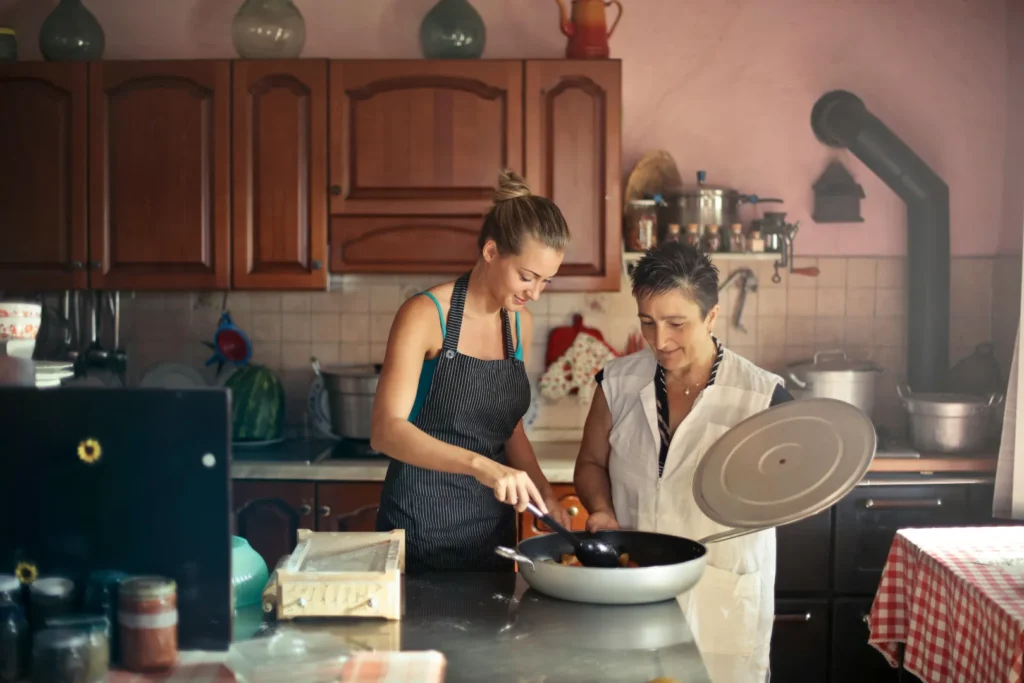
The causes as to why kitchen errors do occur.
This has been related with kitchen errors and this is due to the many minor decisions that are made within the kitchen over a small duration of time. Both of them are sensitive to the quantity of the heat, order of substances, time and cooking and a mere fact, which is getting overlooked, can switch the course of an entire dish. In the absence of the knowledge regarding such relationships, one is prone to making the same mistakes without putting them into any concrete explanations.
The home cooks are mostly not able to learn using instructions, but by observation. Whereas this brings about familiarity, more likelihood of bringing loopholes in the knowledge bases occur. It is these loopholes that give rise to the errors in the kitchen and it seems that they are randomly placed in spite of the predictable schemes that they have.
The other cause of failures that occur in the kitchen is habit. Once a habit was developed, he/she does not enquire why. The awareness may be applied to replace the automatic behaviours with conscious decisions that would improve the performance.
Inadequate Preparation.
It is also among the greatest errors when making a visit to the kitchen whenever he/she decides to spend time cooking without prior planning. The flow of attention and time plan is interrupted by the process of reading a recipe and not measuring the ingredients and using tools during the cooking experience. The outcome of this is a hasty decision and unequal results.
Preparation creates flow. It is also simpler and simple to prepare the food when the right ingredients are available and one is already acquainted with the steps to follow. A basic meal is stressful even without its preparation.
Just a few few minutes in planning would assist in the eradication of error in the future. Such a petty business receives a very large stamp of contradiction and confidences.

Poor Heat Management
The amount of heat added to the kitchen is one of the most common errors that occur in the kitchen. When it is cooked on a burner that might be too hot it burns without enough time to cook but when it is too too weak allows it enough time to cook to get the required flavor.
The majority of cookers are fast at changing the amount of heat instead of keeping an eye on the response of food. The discrepancy in the findings is owed to the fact that this is reactive in nature.
Control and predictability Control and predictability on cooking process is formed when learning how to apply heat on different ingredients.
The other error that majority commits in the kitchen is excessively filling the pan and this disrupts the texture and browning of the dish. Food that is touched is packed with water and food does not cook but it rather steams.
The most likely reason of this fault that undermines quality is time saving. The batch-cooking improves taste and appearances.
The area to be used in cooking should offer the uniform distribution of heat and enhance the outcome.
Knowledge of Condition of Ingredients.
Use of old or poorly stored ingredients in the kitchen is another error that does not attract much attention. The strong techniques do not entirely surpass the quality of ingredients.
The new produce is organic and can be expected to taste natural. The ingredient consciousness can boost the performance without bringing about any complications.
Quality ingredient selection process guarantees the cooking process.
Experience errors are small yet effective mistakes at the kitchen. This will lead to imbalance since all the seasoning will not be prepared as it was tasted simultaneously.
It must be gradual experience and process of change by trial. This will protect against hidden or boring tastes.
The fact that one is an experienced person contributes to being very confident and creative.
Not Tasting During Cooking
The most preventable kitchen errors need to include listing of not testing food. Cooks are not permitted to make any adjustment in terms of seasoning, make any changes in the texture or balance.
The mechanism of developing intuition and cognition is tasting. It makes cooking a responsive, as opposed to a repeat process.
Tasting is repeated and this increases the learning and learning results.
Most of the kitchen errors are caused by the rush, especially deficiency of homogeneity in cooking and taste formation. The food also requires time to cook in order to have a good texture and balance.
Cooking ingredients is not necessarily a more difficult method of attaining a better result.
It is preferable to think on how to make things slow to improve foods and pleasure.
Using Incorrect Tools
It will cause an undue discrepancy and inconsistency in the application of the wrong tools. One of the causes of kitchen errors is the use of dull knives/ thin pans or the wrong utensils.
Efficient tools provide technique, safety and efficiency. They make the cooking process as pleasant as well.
The frustration and control can be enhanced with the help of the knowledge of the tool choice.
One of the notorious kitchen mistakes that have been found to result in deficiency in balance is bad timing. The prematurely introduced or inclusions of ingredients disrupt the texture and taste.
The time and order constitute the rhythm in cooking. This beat fosters continuity as well as trust.
The learning and practice of the temporality.
Skipping Resting Time
The error that is minor concerning the kitchen touches upon the failure to allow food to cool down after cooking it. Sleeping is a time by which juices and flavors are provided with the opportunity to redistribute thus contributing to the texture.
One can cut easily or serve prematurely and that would be probable to dry.
Rest time does not also force one to be straining in the quest to realize the end results.
The other one of the errors that can be committed in the kitchen is the overcomplication, which may complicate the entire matter. The overindulgence in the ingredients, and in the processes, is apt to enthrall the taste.
Where discipline and focus are considered, easy meals are healthy. It is a good skill to quit.
Strauss is a fidelity and security accomplice.
Repeating the Same Errors
Errors in the kitchen may happen most of the time when the cooks do not provide reflections of the results. Errors are random and inconsiderate.
Each meal offers feedback. Mistakes are converted to lessons through listening.
The enhancement is quicker in case it involves learning.
The alterations that should be noticed are the changes that are supposed to be done in its habits and not radical changes and this is the way that it should be done to prevent making errors committed in the kitchen. The minute variations that are repeated day to day, mean a lot.
Confidence and pleasure are achieved through the consciousness. One of such arts is cooking which develops itself.
It is through time that the bad habits are replaced with the good ones.
Kitchen Mishaps and Trust.
This is not the outcome, but the cause of kitchen errors. The disappointments are repeated and this discourages cooks.
The rejuvenation of motivation is also carried out when the error is recognized as learning process. The improvement is something possible.
Confidence comes as a result of familiarity and experience.
This will make the cooking process the fun part as much of the mistakes that one can make in the kitchen will be minimized. The stress level can be reduced and this leads to emphasis and satisfaction.
Healthier foods also leave one with greater appetite to cook food.
Sustainable cooking is enabled by leisure.

Conclusion
Errors in the kitchen are an inevitable component of the learning process on how to cook, but do not necessarily have to be used to describe the experience. Familiarity with common mistake can provide the house cookers with an opportunity to make considerable changes with no augmentation of load and complexity. The day to day food is subjected to inordinate modifications due to minor changes in the preparation, heat and timing.
The data about cooking tips and teaching in foodlyBlog would help house cookers to identify and avoid the mistakes associated with the kitchen and to be confident. The official sources are not excessive in details and contribute to the further development.
Whether or not it is perfect is not whether it is perfect in not committing any cooking mistakes. It will also have to deal with the problems of consistency, awareness and patience. Each innovation accumulates reputation and experience.
By critically and thinkingly noting the errors in a kitchen, home cookers can transform the daily lives in the kitchen to become less turbulent and pleasurable life to experience.

